
As horse owners, we know the importance of monitoring our mount’s health closely and it is helpful to know what is emergent and what can wait. With ocular disease, "waiting until morning" can often be the difference between a simple recovery and permanent vision loss. Because a horse’s eye can deteriorate significantly in as little as 24 hours, recognizing the early warning signs of pain is critical.
At Eye Know Ophtho, we want to empower you with the knowledge to act fast. Here are some common "Red Flags" that require an immediate call to your veterinarian.
The Red Flags
If you notice any of the following, your horse is likely experiencing ocular distress and should be examined by a veterinarian:
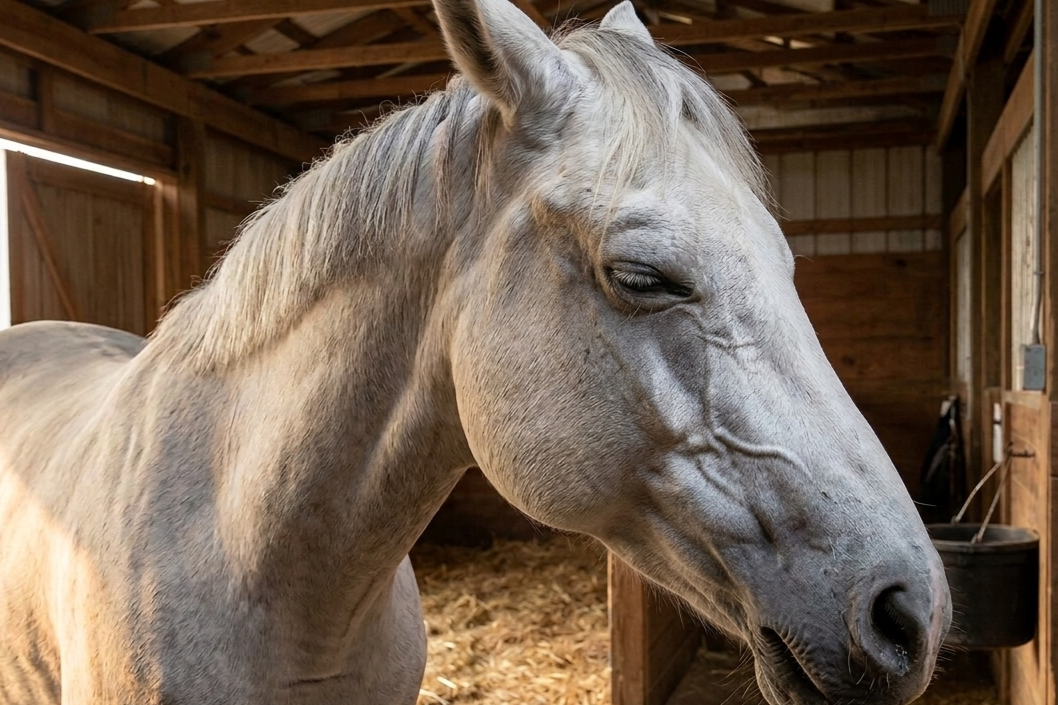
Squinting or Holding the Eye Shut
Known medically as blepharospasm, this is the most reliable sign of ocular pain in a horse. A horse should have both eyes wide and bright; if one is partially or fully closed, there is a problem.
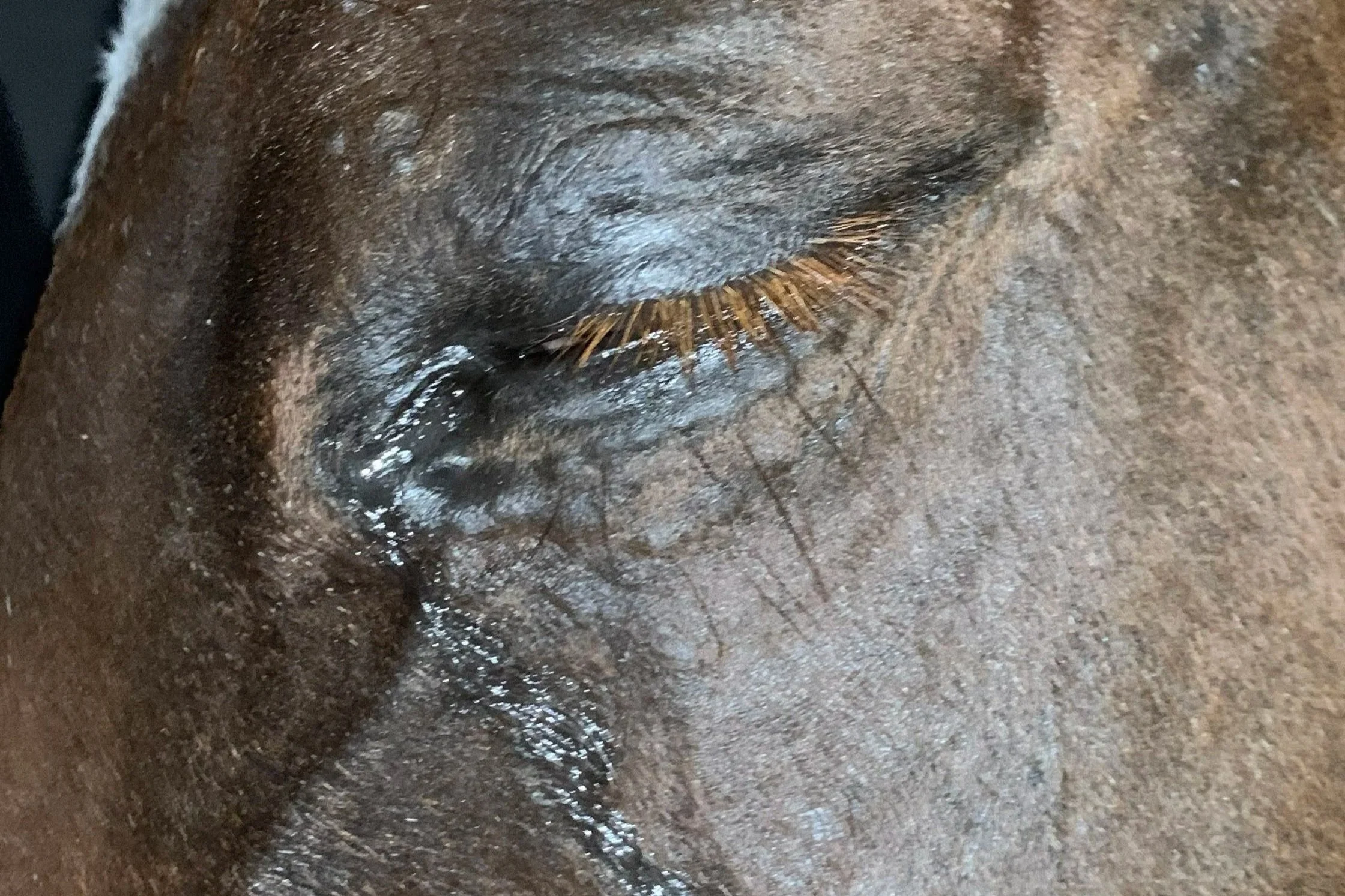
Excessive Tearing or Discharge
While some "eye goop" can be normal, look for changes. Be concerned if you see constant tearing (epiphora), "creamy" yellow or green pus, or any trace of blood.
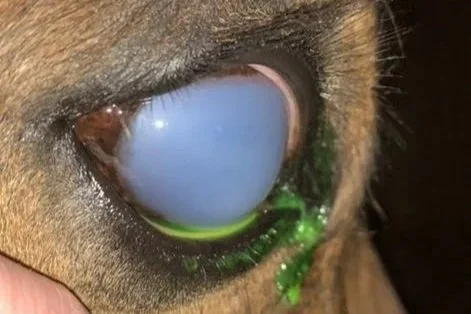
Cloudiness or Color Change
A healthy cornea is crystal clear. If you see a blue, white, or yellow haze across the surface, it indicates active inflammation, fluid buildup, or a serious infection.
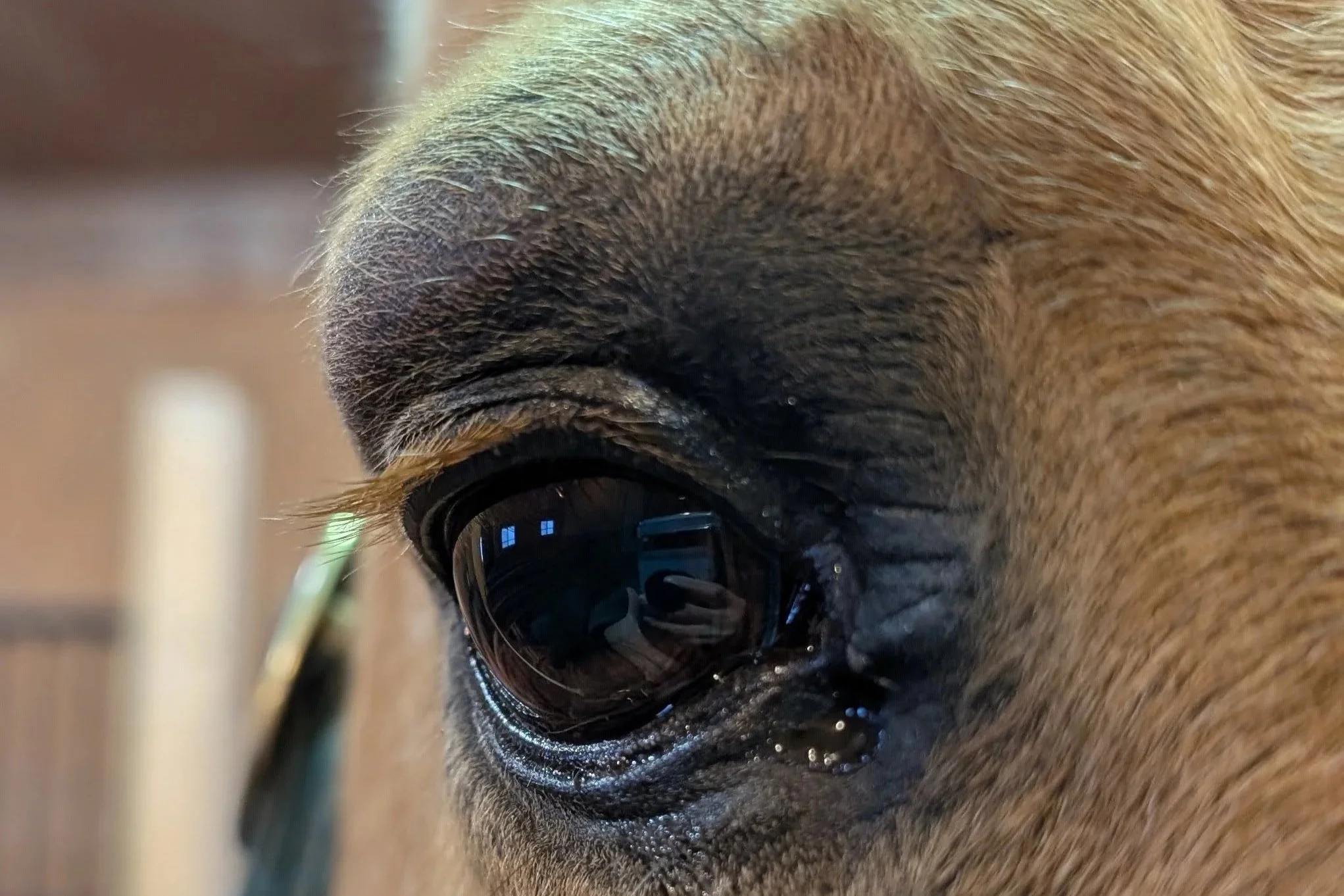
Swelling
Any puffiness or "bulging" of the eyelids or the pink tissues (conjunctiva) surrounding the eye globe is a sign of trauma or internal inflammation.
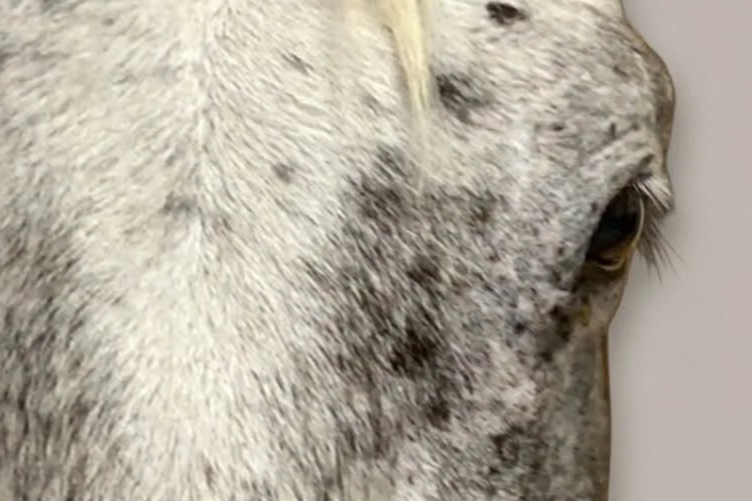
"Eyelash Position"
This is a subtle but vital sign. In a comfortable horse, eyelashes point straight out or slightly upward. If the eyelashes on one eye are pointing downward toward the ground, it often indicates the horse is subtly squinting due to pain.
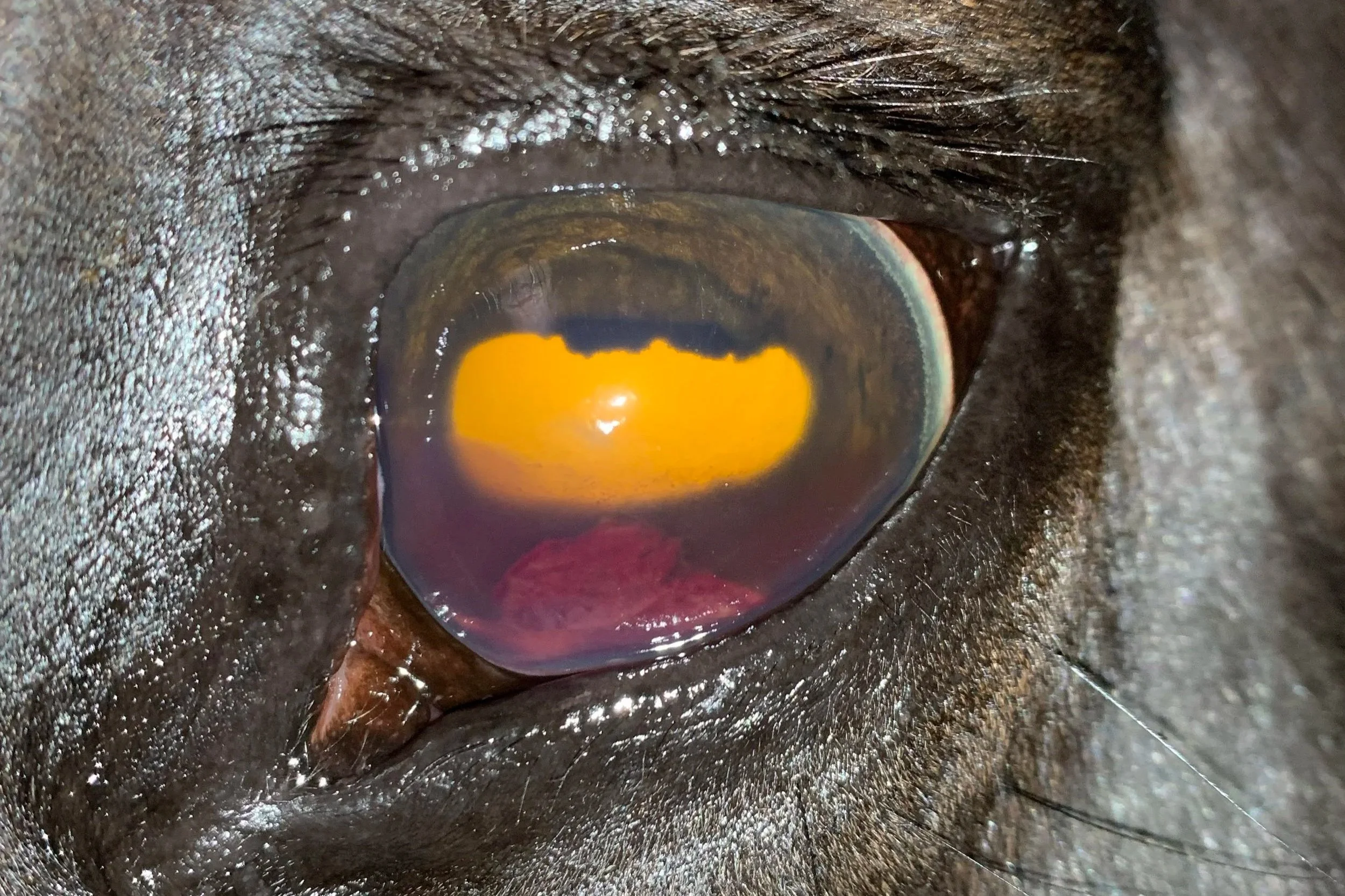
Free blood in or around the eye
The fluid inside an eye is clear. If this fluid suddenly becomes bloody or if there is blood coming from the eye, an emergent veterinary visit is indicated.
What to Do (and NOT to Do) While Waiting for the Vet
If you have discovered an eye issue and have a vet on the way, your immediate actions can help keep the horse comfortable and prevent the condition from worsening.
DO:
Move them to a secure location: If possible, move your horse to a stall and dim the lights to keep them calm and quiet. Increased activity can worsen some ophthalmic conditions.
Protect the eye: Use a clean fly mask to create a barrier. This prevents the horse from rubbing the eye against their leg or a fence post, which can turn a small scratch into a ruptured globe. Structured fly masks are preferred. Alternatively, cross tying your horse can also help prevent rubbing. A good grooming session while you wait may be a welcome distraction for both of you (just avoid creating a lot of dust around the affected eye).
DON'T:
Never use "leftover" ophthalmic medications: This is the most important rule. Specifically, avoid any ointment containing steroids (like Triple Antibiotic with Dexamethasone) unless a vet has confirmed the cornea is intact. If your horse has a corneal ulcer, applying a steroid can cause the eye to "melt" and rupture within hours.
The Bottom Line
When it comes to equine ophthalmology, in many cases time is of the essence. Early intervention not only saves vision but often results in a shorter, less expensive treatment course.
If you are concerned about your horse’s eyes, contact your primary veterinarian immediately. For specialized care or advanced diagnostics, the team at Eye Know Ophtho is here to support you and your horse’s vision.
